

By Steven Rodriguez, SMP Artist at Supreme SMP
You’ve noticed the thinning but you’re not ready to shave. Density SMP can restore the appearance of fullness while keeping your natural hair intact — but if you have red or auburn hair, the pigment process is genuinely different from anything a standard practitioner handles every day. Here’s what to get clear on before you book.
1. Red hair demands custom pigment mixing, not an off-the-shelf formula
Most SMP pigment ranges are built around dark brown and black tones. For men with ginger, auburn or copper hair, a practitioner needs to blend warm-toned pigments from scratch to match the specific shade of your follicles. There is no single bottle labelled “red” that does the job.
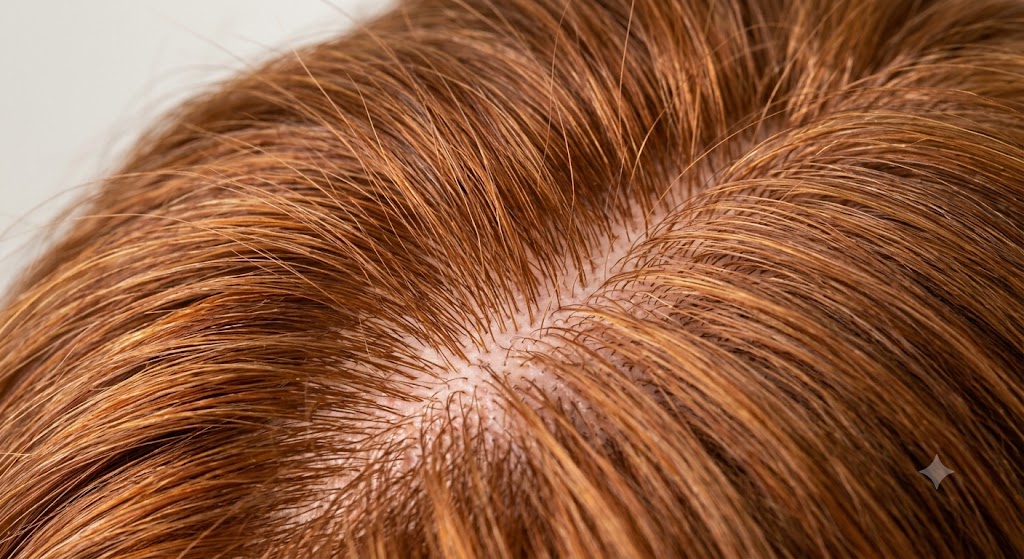
The target isn’t to match your hair strands: it’s to replicate the colour of a freshly shaved follicle at your exact root tone. For red-haired men, that base sits somewhere between a warm terra-cotta and a muted rust, depending on how light or dark your natural shade runs.
2. Avoiding orange is the central technical challenge
The biggest risk in ginger hair micropigmentation is pigment that heals too warm, leaving dots that read as orange rather than a natural follicle. This happens when the mix leans too heavily on red or yellow pigment components without enough cool neutralising tones to balance them.
The fix is layering: placing a slightly cooler undertone in the first session and building warmth gradually across subsequent sessions. This gives the practitioner control over how the final healed result reads against your skin tone, rather than committing to a single saturated mix on day one.
3. Your skin tone determines how warm the pigment should actually go
Two men with identical auburn hair can need noticeably different pigment formulas if their skin tones differ. Fair, cool-toned skin tends to amplify warm pigment, so the mix needs to be slightly more muted. Olive or medium skin tones absorb warmth differently, often allowing a richer, more saturated blend without the orange risk.
This is why consultation matters more for auburn hair density work than it does for standard dark-hair SMP. A practitioner who skips a detailed skin tone assessment before mixing is cutting a corner that will show up in your healed result.
4. Healed colour will shift, and that’s expected
Fresh pigment always sits darker and more saturated than the healed result. For red-haired men, this shift is more pronounced because warm tones tend to soften and cool slightly as the skin heals over the first few weeks. What looks slightly too copper on day two often settles into a convincing warm-brown follicle tone by week four.
Most density treatments are completed across two to four sessions spaced a few weeks apart. That spacing is deliberately built in so each layer of pigment can be assessed healed before the next session refines depth, warmth or distribution. Judging the result before it has fully settled leads to unnecessary adjustments.
5. Top-ups will be needed to maintain tone accuracy over time
SMP typically holds well for one to three years before a top-up is recommended, and for red-haired men, pigment maintenance has an extra dimension. Warm pigment components can fade unevenly, sometimes shifting the balance between warm and cool tones in the blend as years pass.
A well-timed top-up lets the practitioner re-assess your current hair colour and skin condition before refreshing the pigment. This matters if your natural auburn has darkened or lightened since your original sessions. Colour-matched density SMP is not a one-time calibration; it’s an ongoing match to a shade that itself may evolve.
Red and auburn hair is not a barrier to great density SMP results, but it does require a practitioner who treats pigment mixing as a technical skill rather than a routine task. Ask direct questions about warm-tone blending before you commit. The answers will tell you quickly whether you’re in the right hands.
Frequently Asked Questions
Can density SMP genuinely match ginger or auburn hair?
Yes, ginger hair micropigmentation is achievable when a practitioner custom-blends warm-toned pigments to match your specific follicle shade. The key is replicating the root tone rather than the hair strand colour, and neutralising warmth carefully to avoid an orange result across two to four sessions.
How many sessions does density SMP take for red-haired men?
Most density SMP treatments are completed across two to four sessions, spaced a few weeks apart. For red and auburn hair, this spacing is especially important because it allows the practitioner to assess how warm-toned pigments have healed before adding further depth or adjusting the colour balance.
Is numbing cream used during a density SMP session?
Numbing cream is not typically used as standard, because it can affect pigment retention depending on skin type and individual reaction. It is available if needed and applied one hour before the session begins. Most clients find the procedure well within a comfortable tolerance without it.
How long does SMP last on red or auburn hair before a top-up is needed?
SMP typically holds well for one to three years before a top-up is recommended. For men with auburn hair density work, top-ups also serve as an opportunity to re-match pigment if natural hair colour has shifted over time, ensuring the warm-toned blend continues to look accurate against your current shade.
What should I ask a practitioner before booking SMP for red hair?
Ask specifically how they approach warm-tone pigment mixing and what steps they take to avoid an orange healed result. Request healed examples of ginger or auburn hair micropigmentation work, not fresh-session photos. A practitioner experienced in red hair density SMP will answer these questions without hesitation.