
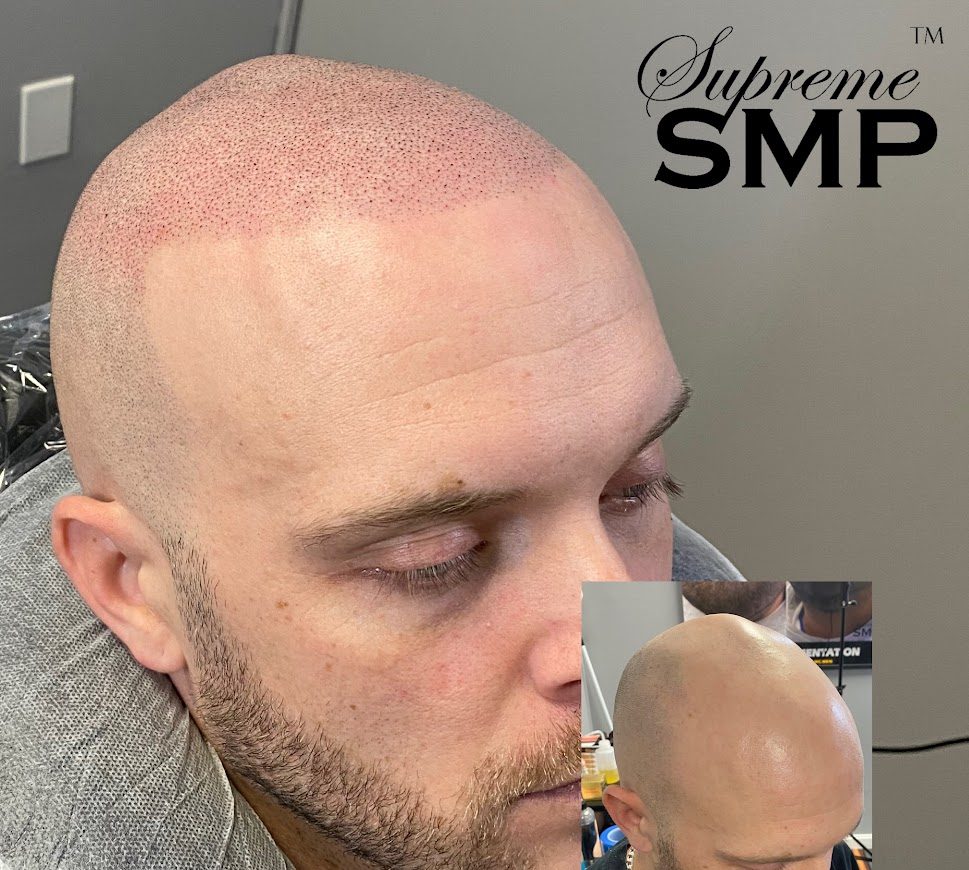

By Steven Rodriguez, SMP Artist at Supreme SMP
You’ve got fair skin and you’re wondering whether SMP will look natural or whether it’ll sit on your scalp like a series of obvious dark stamps. It’s the right question to ask. Scalp micropigmentation on pale skin is fundamentally a contrast challenge, and getting it right depends on pigment selection, technique, and patience across sessions. This article explains exactly what makes it work, what can go wrong, and what a properly executed treatment should deliver.
Why skin tone changes everything about the result
The lighter your complexion, the more visible any mismatch between pigment and skin becomes. A shade or two too dark and the dots look artificial. Too blue-toned and the result reads as a tattoo rather than a follicle.
On deeper skin tones, minor pigment variations tend to blend in. On fair skin, they don’t. This is why pigment selection is arguably the most important decision in the entire process. The correct pigment for a pale complexion is typically a muted, cool-neutral grey rather than a pure black. It mimics the natural shadow of a close-cropped follicle without creating a harsh optical contrast against light skin.
It’s also worth understanding that fair skin can be thinner and more reactive. That affects how pigment is deposited, how it heals, and how it looks once settled. An experienced SMP artist working on light skin will adjust needle depth and implant pressure accordingly, depositing pigment precisely into the dermal layer where it stabilises correctly and doesn’t spread or blur over time.
The technique adjustments that separate good results from great ones
The dot pattern itself needs rethinking for pale complexions. On darker skin, a bolder, slightly denser pattern can look entirely convincing. On fair skin, that same density reads as unnatural because the contrast is simply too high. The solution is a softer, more dispersed pattern that mimics the way real stubble actually appears on a light scalp.
Hairline design is equally critical. A very sharp, geometrically precise hairline rarely looks convincing at close range, but on pale skin it’s especially unforgiving. A micro-irregular, naturally receding edge with lighter, more widely spaced dots at the very front creates the illusion of real hair growth in a way that a blunt line never can.
Layering across multiple sessions is what builds convincing depth. Most treatments are completed over two to four sessions, typically spaced a few weeks apart. This gradual build-up allows the artist to assess how pigment has settled in your specific skin before adding the next layer. Trying to achieve the final result in a single session on fair skin is a shortcut that almost always produces something too bold or uneven. Patience across sessions is what creates the natural result you’re actually after.
What to expect from the process as someone with a fair complexion
Immediately after your first session, the dots will appear darker and more defined than the finished result. Fair skin tends to show this initial boldness more visibly than other skin types, so don’t judge the outcome until at least ten days after each session, once the skin has healed and the pigment has softened to its true settled colour.
Numbing cream is available and can be applied around an hour before your session if needed, though it isn’t routinely used. Depending on your skin type and how it reacts, numbing agents can affect pigment retention, so this is a decision to discuss beforehand rather than assume on the day.
Once complete, SMP typically holds well for one to three years before a top-up is recommended. Fair skin isn’t necessarily faster to fade than other tones, but sun exposure accelerates pigment breakdown for everyone. If you’re regularly outdoors without head coverage, factor that into your maintenance expectations. A high-SPF sunscreen on the scalp is one of the simplest and most effective ways to extend the life of your result.
The finished look, when the pigment is correctly matched and the technique is properly calibrated for your complexion, is a close-cropped, realistic shadow across the scalp. Not a tattoo. Not a painted-on effect. A convincing replication of a shaved head with natural-looking follicle detail, regardless of how fair your skin is.
Frequently Asked Questions
Will scalp micropigmentation look too dark or obvious on pale skin?
Not if the pigment is correctly selected. SMP for light skin requires a muted, cool-neutral grey rather than a black pigment. This reduces contrast against a fair complexion and produces a result that reads as natural follicle shadow rather than a stark artificial dot pattern. Pigment matching is the most critical decision in the process.
How many sessions does SMP on pale skin usually take?
Most treatments are completed over two to four sessions spaced a few weeks apart. For micropigmentation on a fair complexion, this gradual layering is especially important because it allows the artist to assess how pigment settles in your specific skin before building further. Rushing the process in fewer sessions risks a result that appears too bold or uneven.
Does fair skin affect how long SMP lasts?
Skin tone alone doesn’t significantly shorten how long SMP holds. Scalp micropigmentation typically lasts one to three years before a top-up is needed. Sun exposure is the main factor that accelerates fading for all complexions. If you spend a lot of time outdoors, applying a high-SPF sunscreen to the scalp will meaningfully extend the life of your result.
Is numbing cream used during SMP treatment?
Numbing cream isn’t routinely applied during scalp micropigmentation because, depending on skin type and individual reaction, it can affect pigment retention. It is available if needed and would be applied approximately one hour before your session. Whether to use it is a conversation to have with your SMP artist ahead of time, not an assumption to make on the day.
What hairline style works best on a pale complexion?
A soft, micro-irregular hairline with lighter, more widely spaced dots at the front edge tends to look most convincing on fair skin. A sharp geometric line creates too much contrast and reads as artificial at close range. A naturally receding, slightly diffused edge mimics how real hair grows and is far more difficult for anyone to detect as scalp micropigmentation.