
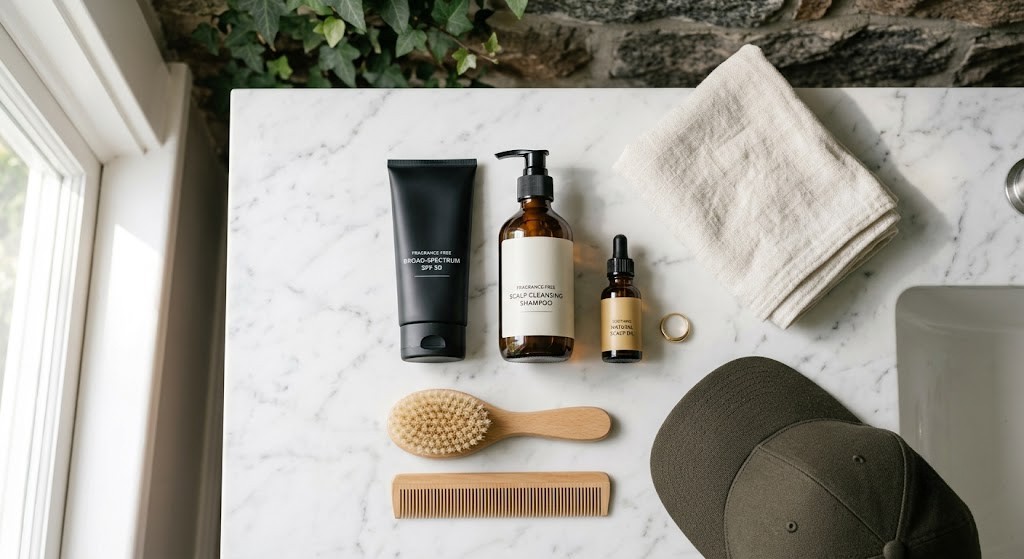

By Steven Rodriguez, SMP Artist at Supreme SMP
You have just had your SMP session and the result looks sharp. Now the real work begins. What you do in the next 30 days determines how well that pigment sets, how natural the healed result looks, and whether you need corrective work later. This guide covers exactly what to do and avoid, day by day, through the full healing period.
Days 1 to 4: the no-touch window
The first four days are the most critical. The pigment has been deposited into the scalp and the skin is now in an active healing response. Treat your scalp as though it is fragile, because right now it is.
No water on the scalp. No shampoo. No swimming. No saunas. No exercise intense enough to cause sweating. Sweat is the biggest culprit during this phase: it introduces moisture and salt directly onto fresh pigment dots, which can cause them to lift, blur, or fade unevenly before they have had a chance to anchor properly.
Redness is completely normal and typically subsides within two to three days. The scalp may also feel slightly tender or tight. Resist any urge to scratch or rub the treated area. If you sleep on your side, use a clean pillowcase and avoid rough fabrics against the scalp overnight.
You will also notice that the pigment looks very dark and defined in these first few days. That is not the finished result. Almost every client asks about this, so it is worth setting the expectation clearly: the colour will lighten. That is not the treatment failing. That is normal healing.
Why the pigment appears to lighten during healing
SMP deposits pigment at the epidermal to upper dermal interface, roughly 1.5 to 2 millimetres into the skin. As the top layer of the epidermis naturally sheds and renews itself over the following weeks, some of that surface-level pigment clears. Epidermal turnover takes approximately 27 days, which is precisely why the full healed result is not visible until around day 30.
What remains after healing is the dermal pigment, which sits deeper and gives that realistic replicated-follicle appearance. It will look softer, more natural, and slightly lighter than what was visible immediately after the session. This is by design. The progression across multiple sessions, most clients complete two to four spaced a few weeks apart, builds density incrementally. Each session deepens the result and compensates for that natural fading.
If by day 10 the pigment looks patchy or significantly lighter in specific zones rather than uniformly softened, make a note and raise it at the next session. Some variation between zones is normal; large areas of near-total fading can indicate a retention issue worth discussing with your practitioner.
Days 5 to 10: gentle reintroduction
From day five you can begin washing the scalp gently with a mild, fragrance-free shampoo. Use your fingertips only. No scrubbing, no harsh exfoliants, and no vigorous towel-drying. Pat dry only.
Sun exposure remains off limits during this window. UV radiation is one of the most significant accelerants of pigment fading, and the scalp skin is still healing. If you need to be outside, wear a hat or cap that sits lightly without pressing against the scalp.
Light, non-sweaty activity is generally fine from around day five. A short walk is fine; a gym session that leaves you drenched is not. Hold off on intense cardio or contact sport until you are comfortably past day ten.
Avoid swimming pools and open water for a full 28 days after your final session. Chlorine and salt water are particularly aggressive on pigment during the healing period and can cause premature fading or uneven results.
Day 10 and beyond: protecting the long-term result
From day ten, normal grooming can resume. If you are maintaining a shaved or close-cropped look, which most clients with androgenetic alopecia opt for, resume shaving as usual. A fresh blade and a calm, even pass are fine once healing is complete.
The single most important habit from this point forward is SPF. Apply SPF 30 to 50 sunscreen to your scalp every day you are outdoors. Sun exposure is the primary driver of premature pigment fading, working alongside natural skin ageing and immune-cell activity to break down the pigment over time.
With consistent SPF use and sensible care, most clients find their SMP holds well for one to three years before a top-up is recommended. Touch-up sessions are straightforward and significantly shorter than the original treatment sessions.
Factors that accelerate fading include oily skin, high sun exposure, faster cellular metabolism, and certain medications. Drier skin and consistent SPF application tend to support longer-lasting results. If you notice uneven fading or a shift in tone, as some pigments can shift towards blue or green if deposited incorrectly or exposed to excessive UV over time, contact your practitioner rather than waiting for a scheduled top-up.
Signs that warrant a call to the clinic
Most healing is uneventful, but there are specific signs that mean you should contact your practitioner promptly rather than waiting to see whether things resolve on their own.
Prolonged redness beyond four to five days, significant swelling, oozing, or warmth at the treatment site can indicate infection. This is rare when sterile equipment is used correctly, but it does occur and early treatment matters. An allergic reaction to the pigment is also possible, presenting as persistent itching, raised skin, or a granuloma forming at the pigment site.
Pigment that appears to spread beyond the original dot placement, or that turns a noticeably different colour within the first two weeks, suggests a depth or pigment issue. These are not emergencies, but they do need to be assessed. A reputable practitioner will want to know.
Frequently Asked Questions
How long after scalp micropigmentation can I wash my hair normally?
Avoid all water on the scalp for the first four days after an SMP session. From day five, gentle washing with a mild, fragrance-free shampoo is fine. Normal shampooing and grooming can resume from around day ten, once the initial healing phase is complete.
Why does my SMP look lighter after a few days? Is the treatment fading?
Lightening during the first two to four weeks is a normal and expected part of the healing process. The outer epidermal layer sheds naturally, taking some surface pigment with it. The deeper dermal pigment remains and produces the healed, natural-looking result. The colour stabilises fully by around day 30.
When can I exercise again after a hair replication session?
Light activity is generally fine from day five, but any exercise that causes significant sweating should be avoided for the first four days. Intense cardio, contact sports, and sauna use are best postponed until after day ten. Sweat on a freshly treated scalp can interfere with pigment retention during early healing.
How long does scalp micropigmentation last before a touch-up is needed?
SMP typically holds well for one to three years before a top-up is recommended, depending on skin type, sun exposure, and how consistently SPF is applied. Clients with oily skin or high UV exposure may see fading sooner. Touch-up sessions are shorter than the original treatment and straightforward to complete.
What signs after an SMP session should prompt me to contact my practitioner?
Contact your practitioner if you experience redness or swelling lasting beyond four to five days, oozing, persistent itching, or raised skin at the treatment site. These may indicate infection or an allergic reaction to the pigment. Pigment visibly spreading beyond the dot placement, or shifting colour significantly within the first two weeks, also warrants a prompt assessment.