
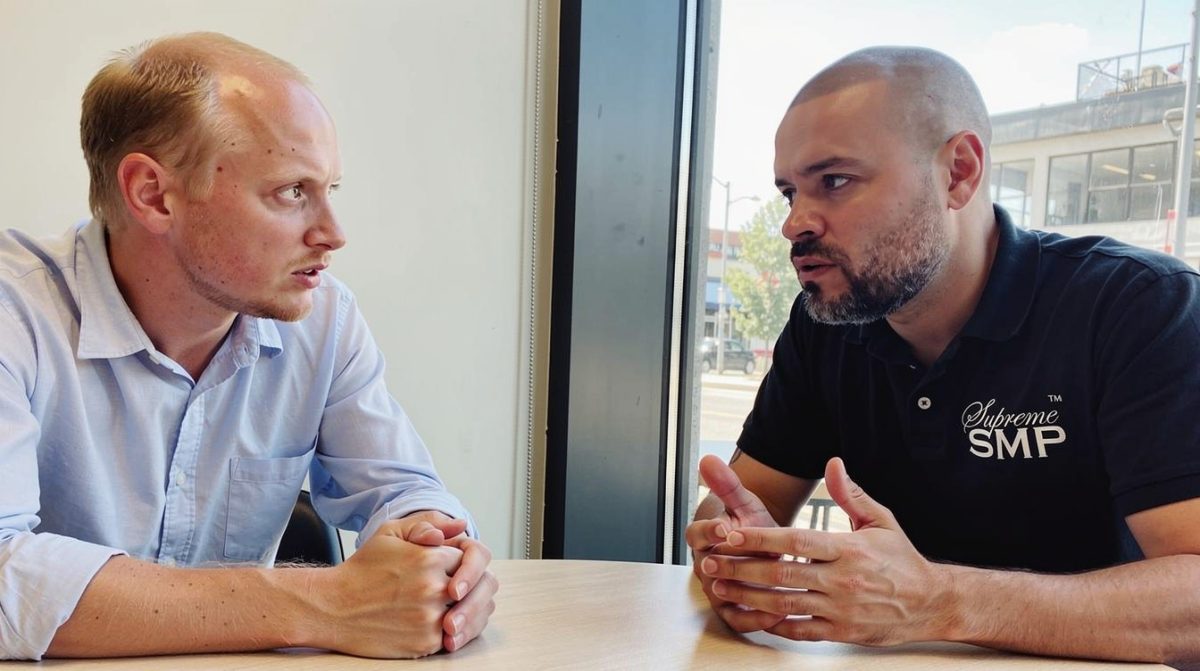

By Steven Rodriguez, SMP Artist at Supreme SMP
Working with blonde hair presents some of the most technically demanding challenges in scalp micropigmentation. The gap between pigment and natural hair colour is narrower, the margin for error is smaller, and the entire result hinges on precision decisions made before a single needle touches the scalp. SMP density for blonde hair is not a variation of standard work — it is a discipline of its own.
Understanding the unique challenges of blonde hair
SMP density for blonde hair is not simply a lighter version of standard density work. It requires a completely different approach to pigment selection, dot sizing, and placement depth. When hair is dark, there is a natural contrast between the scalp and the follicle, which gives SMP its convincing appearance. With blonde hair, that contrast is dramatically reduced.
This means pigment must be carefully matched to complement fair or light tones without appearing grey or muddy against the scalp. Too dark and the treatment looks unnatural. Too light and the density effect becomes invisible. Finding that precise middle ground is what separates a skilled SMP artist from one who is still learning the craft.
I approach every light hair micropigmentation density session with a custom pigment blend. There is no off-the-shelf solution for blonde clients. The mix must account for skin tone, undertones, hair colour variation, and how the pigment will settle over the following weeks.
Contrast management and achieving natural subtlety
One of the most important concepts in blonde scalp treatment is contrast management. The goal is to add visual density without creating a sharp, obvious pattern that draws attention to itself. For men with thinning hair who want to maintain their existing length rather than shave down, this is especially critical.
I work to replicate the appearance of hair follicles at a depth and tone that blends seamlessly with surrounding hair. The dots must be small, consistent, and strategically placed to mimic the natural randomness of real follicle distribution. Anything too uniform or too bold will look artificial under close inspection.
This level of subtlety is where my background in visual communications genuinely informs my technique. Understanding how the eye reads texture, depth, and tonal variation allows me to build density that looks entirely organic. Clients often describe the result as looking like their hair has simply grown back thicker, rather than having had any treatment at all.
For men with very light or platinum blonde hair, I may incorporate a technique where pigment is applied across multiple sessions to build density gradually. This layered approach gives far more control over the final result than attempting full coverage in a single visit.
What to expect from SMP density treatment at Supreme SMP
The process begins with a thorough consultation where I assess your hair colour, scalp tone, and thinning pattern. For blonde clients, I take additional time during this stage to test pigment samples against the skin before committing to a blend. This step is non-negotiable for achieving an undetectable result.
During treatment, I use refined needle configurations and adjusted machine settings suited to light hair micropigmentation density work. The technique applied for a brunette client is not the same used here. Every variable is adjusted to serve the specific demands of fair hair.
As a multi-award-winning SMP artist with three scalp micropigmentation certifications and a diploma in human anatomy and physiology, I bring both technical knowledge and artistic precision to every session. The goal is always a completely natural result — whether someone is viewing your scalp under artificial lighting or in full daylight.
If you want to see real examples of blonde scalp treatment results and density work, I regularly share client transformations on Instagram, Facebook, YouTube, and TikTok. These are genuine outcomes, not staged images, and they give a clear picture of what is achievable.
Frequently Asked Questions
Can SMP density for blonde hair really look natural?
Yes, when performed by an experienced artist, SMP density for blonde hair can be completely undetectable. The key is accurate pigment matching and precise dot work that mirrors natural follicle distribution. Results are subtle by design, adding the appearance of thickness without any sharp or artificial contrast against lighter hair.
How is pigment selected for light hair micropigmentation density?
Pigment for light hair micropigmentation density is custom blended to match the client’s specific hair tone and skin undertones. There is no universal formula for blonde clients. The blend must sit neutrally against the scalp without appearing too dark, too grey, or too warm once it fully settles after the initial healing period.
Do I need to shave my head to get density SMP?
No. Male density SMP is specifically designed for men who prefer to keep their hair at its existing length. The treatment adds the appearance of fuller follicles beneath the hair rather than replicating a shaved look. This makes it an ideal option for men with thinning hair who want to maintain a natural style.
How many sessions does a blonde scalp treatment typically require?
Most clients require two to three sessions, though blonde scalp treatment often benefits from a layered approach with additional sessions to build density gradually. This gives greater control over pigment intensity and tone, reducing the risk of over-saturation. The exact number of sessions is discussed during your initial consultation at Supreme SMP.
Will the pigment change colour over time on fair skin?
Pigment can shift slightly as it ages, which is why correct selection at the outset is critical for blonde clients. Using the wrong base tone can cause pigment to appear blue or grey over time. At Supreme SMP, pigments are chosen specifically to age predictably and remain neutral against fair scalp and hair tones.