
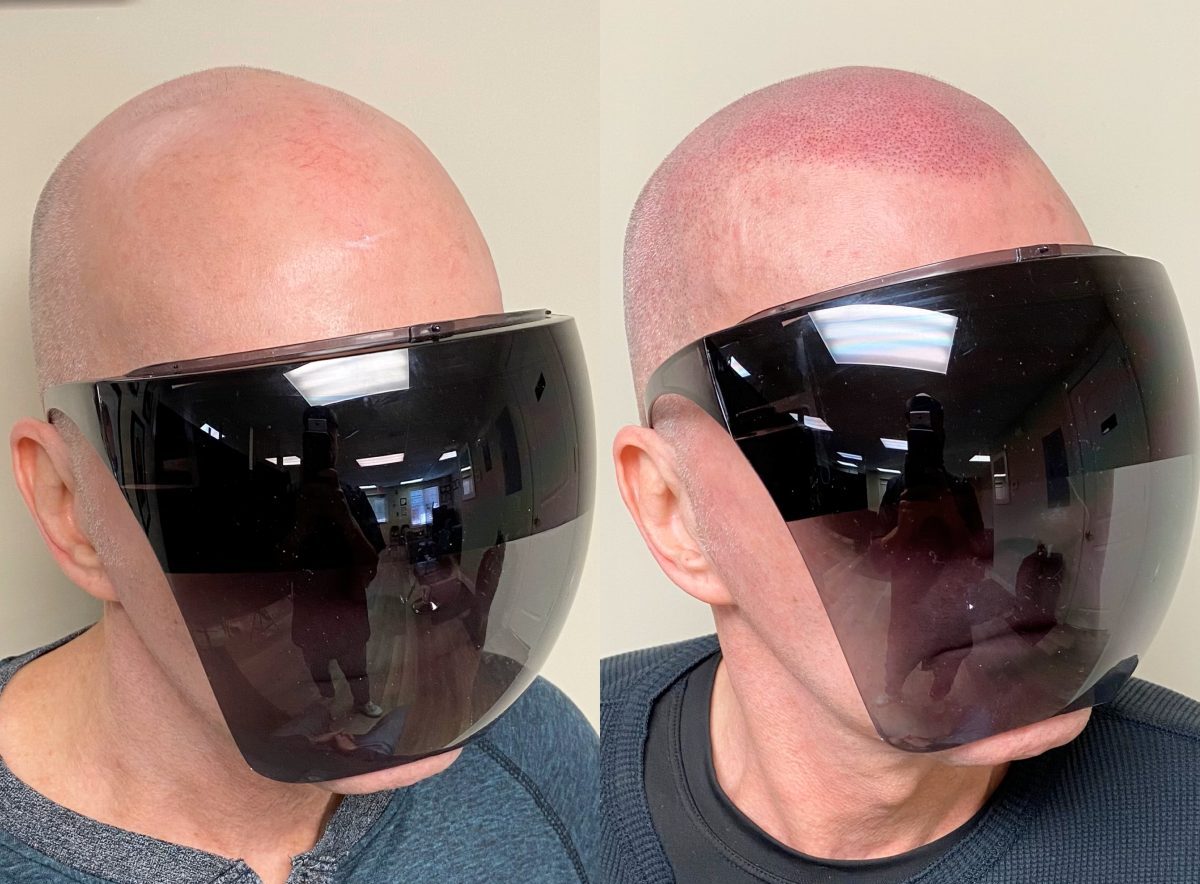

By Steven Rodriguez, SMP Artist at Supreme SMP
Your hairline has been creeping back, and you’re tired of watching it happen. You want a solution that looks completely natural, not one that announces itself every time someone looks at you. This article explains exactly how scalp micropigmentation addresses a receding hairline: from the way the new hairline is drawn to the techniques that make it blend seamlessly with your existing hair.
Why a receding hairline is one of the strongest candidates for SMP
Scalp micropigmentation for a receding hairline works by placing thousands of precisely sized pigment impressions along the scalp to replicate the appearance of a freshly shaved follicle. The result is a hairline that looks real because it mirrors what a real shaved head actually looks like at skin level.
Recession typically follows a predictable pattern: the temples pull back first, then the frontal hairline rises. That progression makes it straightforward to address with SMP, because the practitioner is working with a well-understood template. The goal isn’t to pretend the recession never happened. It’s to create a hairline position that suits your face right now, in a way that looks intentional and sharp.
Unlike surgical options, SMP requires no recovery period. Most treatments are completed across two to four sessions, usually spaced a few weeks apart to allow the skin to settle and pigment to stabilise between appointments.
Hairline design: the decisions that determine everything
The hairline is the most scrutinised part of any SMP result. Get it wrong and even technically precise pigment placement won’t save the outcome. Get it right and nobody will question it.
A strong hairline design starts with your facial structure. A square jaw can carry a crisper, more angular frontal line. A rounder face often benefits from a slightly softer, curved profile that avoids adding visual width. Temple placement matters just as much: bringing the temples too far forward looks unnatural on most men, while keeping them appropriately recessed maintains proportion and believability.
The position also needs to account for how your hairline has moved. Dropping it dramatically low rarely looks right, and it tends to age poorly. A mature hairline placed at the right height for your age and bone structure will look convincing for far longer than an aggressively youthful one that fights against your natural proportions.
Before any needlework begins, I spend time mapping the proposed hairline onto the scalp, checking it from multiple angles and in different lighting conditions. That planning stage is where the real result is built.
Density gradients and blending: what separates a natural result from an obvious one
A hard, uniform line of pigment dots does not look like a real hairline. Real hairlines have a transition zone: slightly finer, lighter impressions at the very edge, building to fuller density a centimetre or so behind it. Replicating that gradient is what makes SMP hairline restoration read as genuinely natural rather than drawn on.
The technique involves varying both the size and spacing of impressions as you move from the leading edge inward. At the hairline itself, impressions are smaller and more scattered. Behind that, they become slightly more concentrated and consistent in size, matching the visual weight of a shaved scalp.
Blending into existing hair is the other critical factor for men who still have some hair remaining around the recession. The pigment needs to match your natural follicle colour closely, and the transition between treated and untreated scalp must be seamless. Pigment that is too dark or too uniform will create a visible boundary rather than a continuation. This is where colour selection and a steady, experienced hand make all the difference.
Pigment tone also shifts slightly as it heals, which is why sessions are spaced apart. Each appointment lets me assess how the skin has received the previous work before refining or building on it.
What to expect from your sessions and how long the result lasts
A typical SMP treatment for micropigmentation for recession across the hairline takes two to four sessions. The first lays the foundational impression across the treatment area. Subsequent sessions add depth, refine the hairline edge, and address any areas where pigment has faded unevenly during healing.
Numbing cream is available and can be applied an hour before your session if needed, though it isn’t routinely used because it can affect pigment retention depending on your skin type and how it reacts. Most clients find the sensation entirely manageable without it.
Once complete, SMP typically holds well for one to three years before a top-up is recommended. Sun exposure and skincare habits are the main variables that influence how quickly the pigment fades. Keeping the scalp moisturised and using SPF when outdoors will extend the life of the result considerably.
When the work is done properly, the finish is a hairline that looks like you decided to keep your hair cropped short: clean, deliberate, and completely yours.
Frequently Asked Questions
Will SMP for a receding hairline look natural if I still have some hair?
Yes, provided the pigment colour is matched carefully and the blending technique accounts for your existing hair. The transition between treated scalp and natural follicles should be seamless. A skilled SMP practitioner will vary impression size and spacing so there’s no visible boundary between the pigmented area and your remaining hair.
How far forward can the hairline be repositioned with scalp micropigmentation?
The new hairline position is determined by your facial structure, bone landmarks, and how far the recession has progressed. Dropping it dramatically low rarely looks convincing and can age poorly. Most practitioners recommend a mature, proportionate position that suits your current features rather than attempting to recreate a teenage hairline.
How many sessions does SMP hairline restoration take?
Most SMP hairline treatments are completed across two to four sessions, spaced a few weeks apart. This spacing allows the skin to heal and pigment to settle between appointments, giving the practitioner a clear picture of how the work has taken before adding further depth or refining the hairline edge.
Does scalp micropigmentation for hairline recession hurt?
Most clients find the sensation manageable. Numbing cream is available and can be applied about an hour before the session if preferred, though it isn’t used routinely because it may affect pigment retention depending on skin type. The practitioner can discuss this with you during the consultation to find the right approach.
How long does SMP last on a receding hairline?
Scalp micropigmentation typically holds well for one to three years before a top-up is recommended. How quickly it fades depends on sun exposure, skincare habits, and individual skin type. Keeping the scalp moisturised and applying SPF when outdoors helps maintain the result for as long as possible between top-up sessions.