
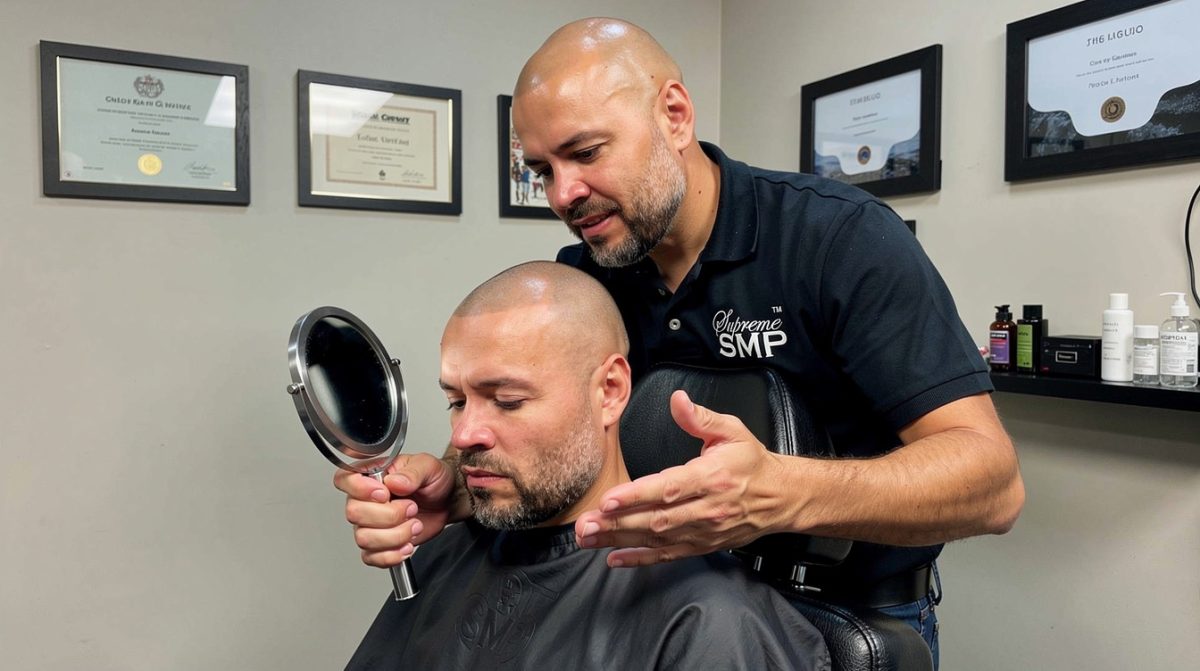

By Steven Rodriguez, SMP Artist at Supreme SMP
Scalp micropigmentation is one of the most effective and low-maintenance solutions available for men who want the look of a closely shaved head. Like any cosmetic procedure that involves pigment being deposited into the skin, it comes with a small number of potential side effects worth understanding before you commit. Being informed is the best way to protect both your result and your health.
Common side effects and why most are temporary
The most frequently reported side effects after an SMP session are redness, tenderness, and mild swelling around the treated area. These are entirely normal responses to the skin being worked on and typically settle within 24 to 72 hours. They are not signs that something has gone wrong.
Some clients also notice slight flaking or dryness during the healing phase. This is part of the natural skin recovery process and should not be picked at or interfered with, as doing so can affect how the pigment settles. Following a proper aftercare routine makes a significant difference to your outcome.
In rare cases, clients experience itching during healing. This is a normal skin response, but if the itching is intense or accompanied by swelling beyond the first couple of days, it is worth contacting your practitioner to rule out an allergic reaction to the pigment used.
Understanding the real SMP risks: infection and pigment issues
Infection is one of the more serious SMP risks, though it is largely preventable when the procedure is carried out in a properly sanitized environment by a licensed practitioner. At Supreme SMP, I hold a body art practitioner licence and a certification in blood-borne pathogens, which means hygiene and client safety are built into every session from the outset.
Signs of infection include prolonged redness, warmth, discharge, or a fever developing in the days after your appointment. If you notice any of these, seek medical attention promptly. Keeping the scalp clean and avoiding swimming pools, saunas, and excessive sweating during the initial healing period significantly reduces this risk.
Pigment migration is another concern that arises in discussions around micropigmentation complications. This occurs when pigment spreads beyond the intended deposit site, producing a blurred or unnatural appearance. It most commonly results from poor technique, going too deep into the skin, or using low-quality pigments. With the right equipment, correct needle depth, and years of trained experience, migration is highly avoidable.
How technique and aftercare minimize micropigmentation complications
The skill of your practitioner is the single most important factor in reducing the likelihood of any complication. A poorly executed hair tattoo from an untrained or under-experienced artist carries considerably more risk than one performed by a certified professional. I hold three SMP certifications, including two at master level, along with a diploma in human anatomy and physiology — all of which directly inform how I approach each individual scalp.
Understanding skin behaviour, how pigment interacts with different skin types, and how to build coverage gradually across multiple sessions all reduce the chance of oversaturation or uneven results. These are not details that can be rushed or improvised.
Your aftercare routine is equally important in managing SMP risks. During the first four days, avoid wetting the scalp, touching the treated area unnecessarily, or exposing it to direct sunlight. After healing is complete, applying SPF when outdoors helps preserve the pigment and prevents premature fading. I walk every client through a detailed aftercare plan so there is no guesswork involved.
Choosing the right practitioner reduces your risk significantly
Not all SMP providers operate to the same standard, and the variance in outcomes reflects that. Researching your practitioner thoroughly before booking is one of the most effective steps you can take to avoid complications. Look for verified credentials, a consistent portfolio, and transparent communication about what the procedure involves.
At Supreme SMP, I document my work extensively across Instagram, Facebook, YouTube, and TikTok so you can see real results before making any decisions. An informed client is always a more confident client, and that confidence is well placed when the preparation has been done properly.
Frequently Asked Questions
Are scalp micropigmentation side effects permanent?
The vast majority of scalp micropigmentation side effects are temporary. Redness, tenderness, and mild swelling typically resolve within a few days. Longer-lasting issues such as pigment migration are rare and almost always linked to poor technique rather than the procedure itself when it is performed correctly by an experienced practitioner.
How do I know if I’m having an allergic reaction after SMP?
Signs of an allergic reaction to SMP pigment include persistent itching, significant swelling, or a rash that develops beyond the first 48 hours. Mild itching during healing is normal, but if symptoms are intense or worsening, contact your practitioner and consult a medical professional to assess the reaction promptly.
What causes pigment migration and how is it prevented?
Pigment migration, one of the more noted micropigmentation complications, occurs when pigment spreads beyond the deposit site. It is most often caused by incorrect needle depth or poor technique. Using quality pigments and working with a certified, experienced SMP artist significantly reduces the likelihood of this issue occurring.
Is infection a serious risk with scalp micropigmentation?
Infection is a genuine but largely preventable SMP risk. It is minimized when the procedure is carried out in a sterile environment by a licensed practitioner. Following aftercare instructions carefully, including avoiding pools and excessive sweating during healing, further reduces the chance of any infection developing after your session.
How many sessions does SMP require and does risk increase with more sessions?
Most scalp micropigmentation treatments involve two to four sessions spaced a few weeks apart. Risk does not increase significantly with additional sessions when the scalp is given adequate time to heal between appointments. A gradual, layered approach improves the result and reduces the chance of oversaturation or uneven pigment distribution.