
By Steven Rodriguez, SMP Artist at Supreme SMP
You’re considering SMP but you’re not sure what walking into that first appointment actually looks like. This article breaks down exactly what a scalp micropigmentation consultation covers, from the questions you’ll be asked to the decisions you’ll make before a single needle touches your scalp. By the end, you’ll know what to prepare, what to ask, and what a thorough assessment should include.
What a proper SMP consultation is actually evaluating
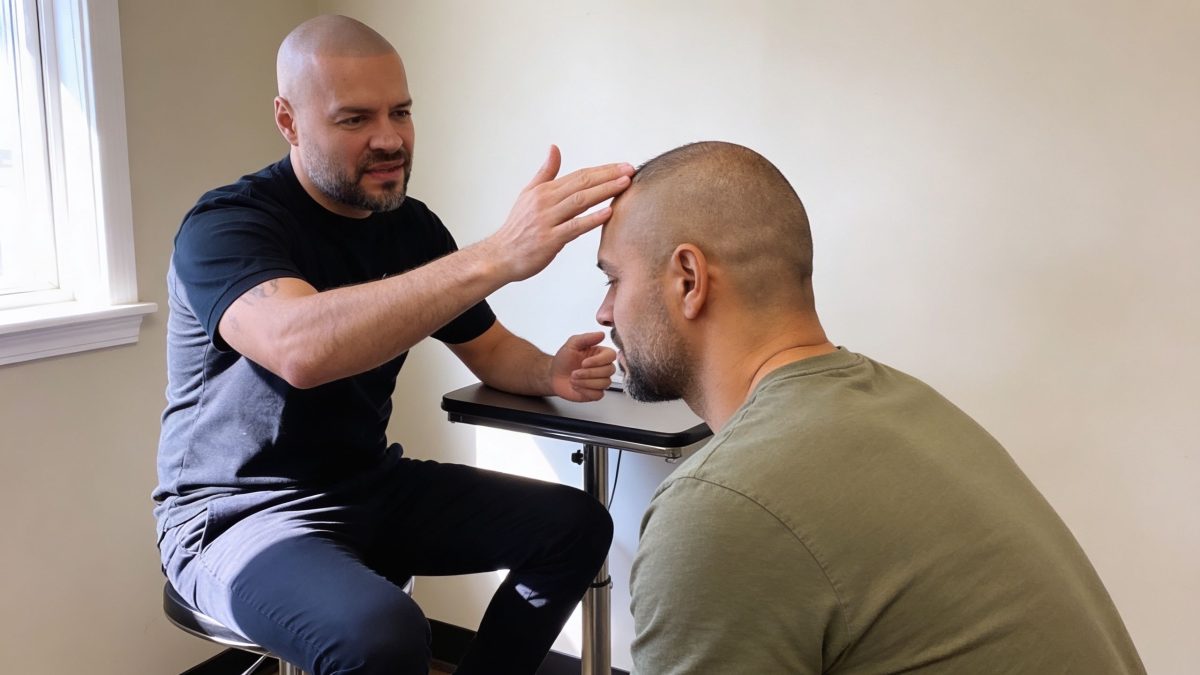
A scalp micropigmentation consultation isn’t a sales meeting. It’s a technical assessment. The practitioner is looking at your scalp condition, skin type, and degree of hair loss to build a realistic picture of what’s achievable.
Your skin tone and texture matter enormously. Oily skin, for instance, can cause pigment to spread slightly differently over time than dry or normal skin. A thorough micropigmentation assessment accounts for this upfront, because pigment depth, needle choice, and dot placement all shift depending on what your scalp presents.
The hairline conversation also happens here. For this style of result, the line sits lower and sharper than you might expect, but the exact position is never guesswork. It’s mapped against your facial structure, your natural hairline remnants, and your personal preference. You won’t be handed a template; you’ll be part of the decision.
The questions worth asking before you commit
The consultation runs both ways. A good practitioner expects you to ask questions, and if they seem reluctant to answer them, that tells you something.
Ask how many sessions your treatment is likely to need. Most SMP treatments are completed across two to four sessions, spaced a few weeks apart, which allows the scalp to heal and the practitioner to refine edges progressively. Knowing this upfront helps you plan your schedule and your budget.
Ask about longevity. SMP typically holds well for one to three years before a top-up is recommended, though this varies with skin type, sun exposure, and aftercare. That’s not a flaw in the technique; it’s the nature of pigment in skin. A practitioner who tells you it’s permanent without nuance is not giving you the full picture.
Ask to see healed results, not just fresh ones. Fresh SMP looks bold and vivid. Healed SMP, a few weeks on, shows you what you’re actually going to live with. There’s a difference, and the portfolio should reflect both.
Patch testing, numbing, and what gets decided on the day
Some clients ask about numbing cream before their sessions. At Supreme SMP, numbing cream isn’t used as standard because it can affect pigment retention depending on your skin type and how your skin reacts. It is available if needed and is applied one hour before the session. This is worth raising at the consultation so your practitioner can advise properly for your specific skin.
The consultation is also when your pigment shade gets discussed. The goal is to match your existing stubble or natural hair colour as closely as possible. This isn’t always a single shade. Scalp skin has undertones, and the pigment selected needs to account for how it will read once healed rather than how it looks on the day of application.
You may also discuss a patch test, particularly if you have sensitive skin or a history of reactions to cosmetic procedures. This involves a small test application in a discreet area to observe how your skin responds before a full session is scheduled.
How to prepare so you get the most from the appointment
Come with your scalp as it normally looks. Don’t shave down to the bone or let it grow out significantly just for the appointment; your practitioner needs to see your natural baseline to make accurate recommendations.
Bring photos if you have a specific hairline shape or look in mind. Reference images give the conversation somewhere concrete to start, especially when discussing whether you want a softer, more mature line or something sharper and more defined.
Think about your lifestyle too. If you’re outdoors frequently or use a lot of scalp products, say so. These factors affect how the pigment ages and how your aftercare plan gets structured. The SMP initial appointment is the right moment to put everything on the table; the more your practitioner knows going in, the better the result coming out.
A well-run scalp micropigmentation consultation should leave you with a clear treatment plan, a realistic idea of what your result will look like, and no unanswered questions about the process. If it doesn’t, keep looking.
Frequently Asked Questions
How long does a scalp micropigmentation consultation typically take?
Most SMP consultations run between 30 and 60 minutes. That time covers your scalp assessment, hairline design discussion, a review of your skin type, and an outline of the treatment plan including the number of sessions needed. It’s enough time to ask questions and leave with a clear picture of the process.
Do I need to shave my head before the consultation?
No. Come with your scalp in its natural state so your practitioner can assess your baseline accurately. If you normally keep a short shave, that’s fine. Drastically changing your hair length just before the appointment can make the micropigmentation assessment less accurate, particularly when planning hairline placement and pigment matching.
Will the hairline position be finalised at the consultation?
Hairline shape and position are discussed in detail at the SMP initial appointment, but the final placement is confirmed at the start of your first treatment session when it can be drawn and adjusted directly on your scalp. The consultation sets the direction; the session locks it in with your approval before any pigment is applied.
What happens if I have sensitive skin or a skin condition?
Raise any skin concerns at your consultation. Your practitioner will assess your scalp condition and may recommend a patch test before committing to a full session. Skin type also influences decisions around pigment depth and whether numbing cream is appropriate, so the more detail you share during the micropigmentation assessment, the better your outcome.
How many SMP sessions will I need after the consultation?
Most scalp micropigmentation treatments are completed across two to four sessions, each spaced a few weeks apart. The exact number depends on your degree of hair loss, skin type, and the look you’re going for. Your practitioner will give you a realistic session estimate at the consultation so you can plan your time and budget accordingly.